Not to be confused with piratical freebooters or private expeditions to overthrow governments, drop over to the blog We’re History to read my take on the dilatory procedure that is often seen as one of the quaint customs of the United States Senate.
A new history e-magazine and the Secret Service

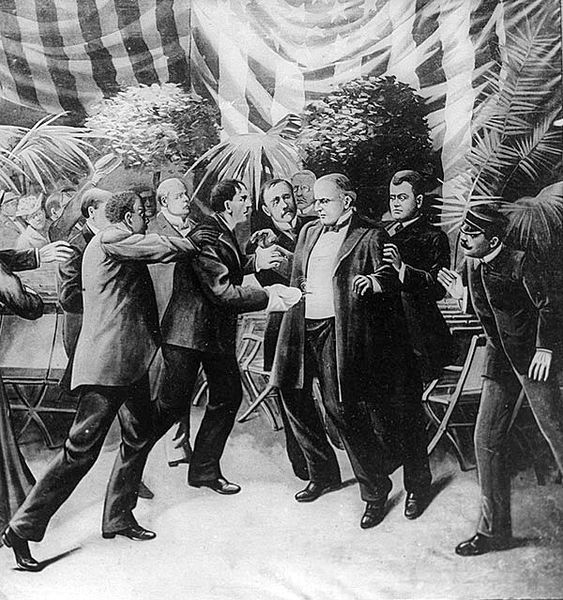
Everyone remembers Lincoln and Kennedy, but few recall the assassination of President McKinley in 1901.
A new history e-magazine, We’re History, has just started up. Its objective is to present history written by historians for a general audience. And wouldn’t you know, one of their newest articles is by your truly, on how the United States Secret Service got the job of protecting the President. And if you enjoy that, check out some other articles on the site as well.
Riding into history: railroads, Boutwell, and an old mill

Built a century and a half ago, I have to admit I’ve always found the Town Hall architecturally uninspiring
I grew up in a small town in Massachusetts called Groton. Not Groton, Connecticut, mind you: that johnny-come-lately town was named after my town, and is famous only for the submarine base. Groton is an old town as New England towns go, founded in 1655, displacing Native Americans who would return to burn it down in 1676. It was rebuilt, but every so often yet another fire takes out a piece of the town’s history.
Back in the day when railroads were the lifeblood of communities, there was a line that ran through the town, carrying passengers and freight. As a kid, I used to hear the freight trains blow their whistles every day. And along with some friends, I’d try the daring experiment of laying a penny on the rails where the tracks crossed Common Street, to see how the train would flatten the penny when it rolled through.
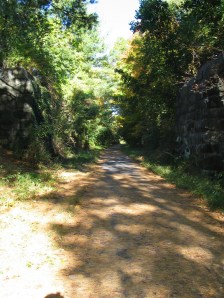
But the railroad through Groton was never a major line. Passenger service had ceased and the town’s train station burnt down before I was born, and freights stopped running while I still lived in town. The right of way could have been abandoned, but the local authorities took it over and remade it into a paved bike trail, running from Ayer, Massachusetts, where the commuter rail still runs from Boston, to Nashua, New Hampshire.
I took a ride on the bike trail earlier this month for the first time. It was nearing peak foliage season, and I wanted to do some leaf peeping. And while I was passing through Groton, I took a few detours to see some of the local history there.
If there is anything Groton is nationally famous for, it is the Groton School, a “prep” school founded in 1884. Franklin Delano
Roosevelt went there before going off to Harvard. There’s a nice view from the Circle at the center of the campus, currently marred by the reconstruction of the Schoolhouse. The most striking building on the Circle is the chapel, a stone Gothic structure that stands in sharp contrast to the brick buildings around it.
The bike path has easy access to downtown Groton because the old railroad station was at the end of a short side street off the main road. George Boutwell, who served as the state’s governor in 1851-52, built his house on the main road facing the station. For much of his life working as a lawyer, he’d walk from his front door down the side street to the station to take the train in to his office in Boston every day. It was said he was so regular you could set your watch by him.
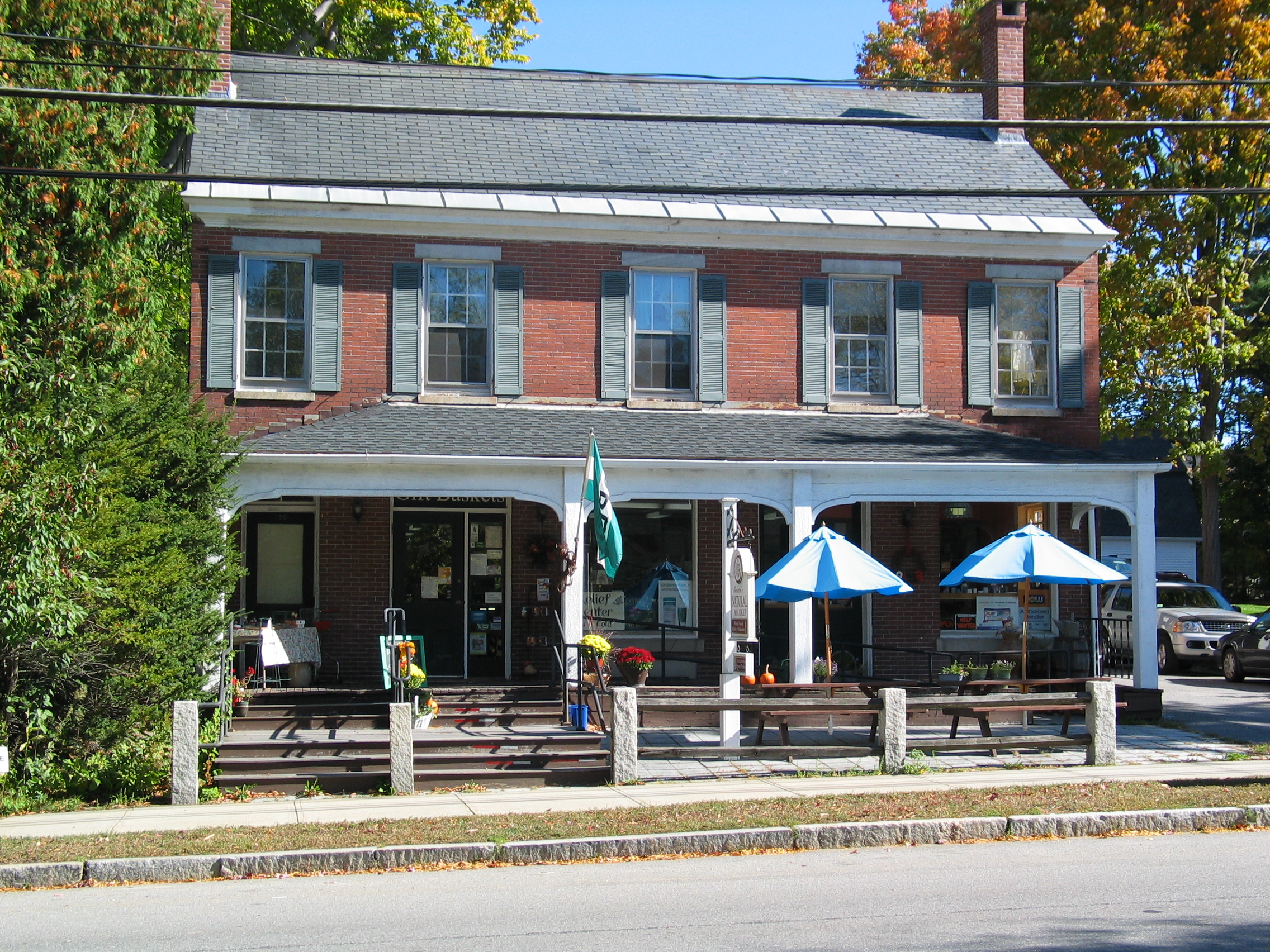
Boutwell didn’t start as a lawyer. Before that, he’d been a teacher. And when he first came to Groton, he worked as a clerk in a store. The building still stands. After years of being the town’s post office, it is once again a store.
Further up the river is evidence of Groton’s industrial past. The Nashua River and its tributaries were a source of water power for many mills, which provided much of the freight traffic for the railroad. But cheaper labor in the South doomed the New England mills.
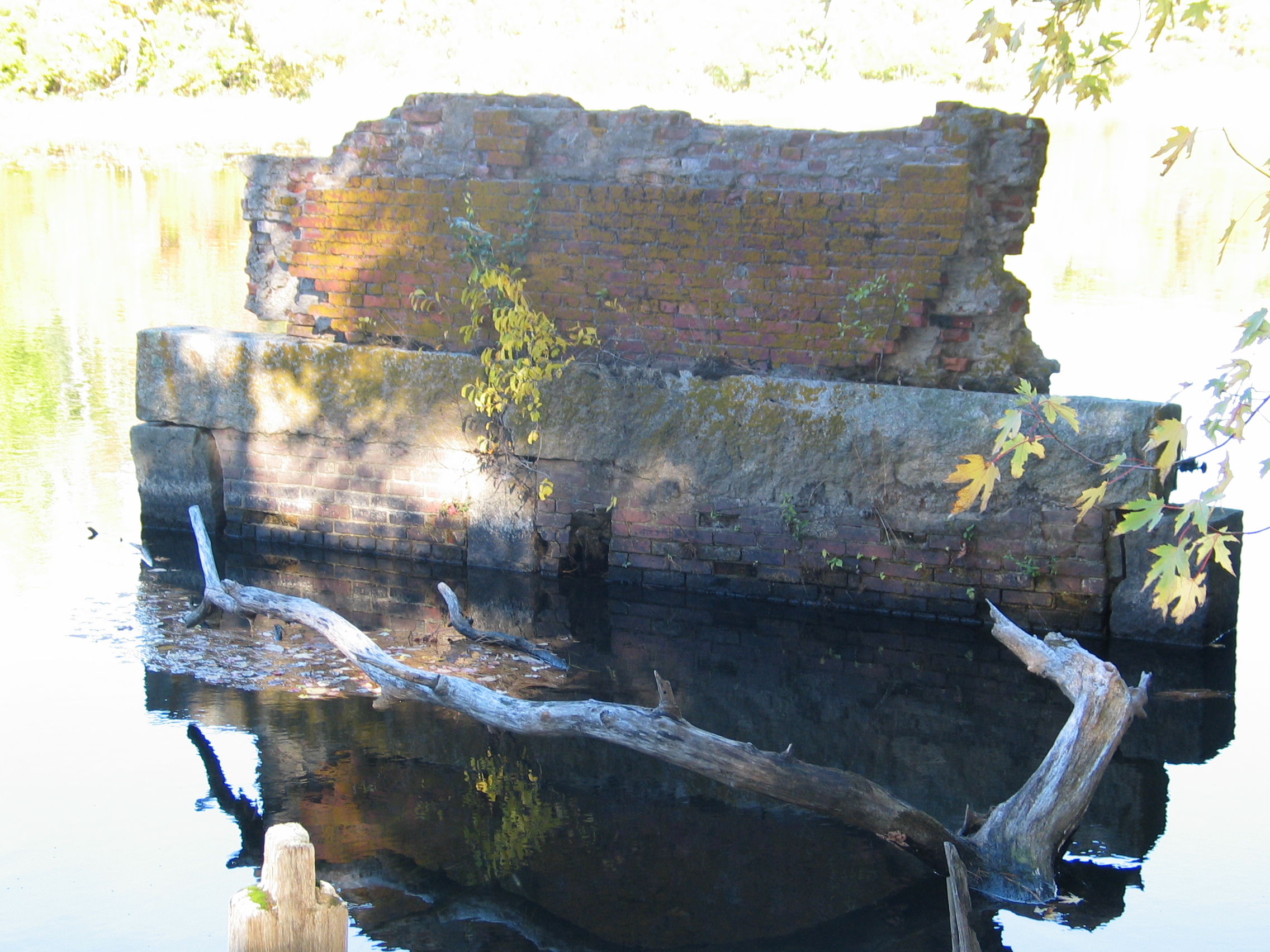
This one here burned down before I was born and was not rebuilt. I remember when this brick wall used to stand three stories tall, but the elements have caused it to crumble.
There are still mills and dams on the river. The one in East Pepperell, Massachusetts makes the river slow and sluggish in the interval between that community and the burnt mill. Yet a half a century of work have made the river look clean and lovely, quite a wonder for those of us who remember it changing its dismal polluted colors by the season!
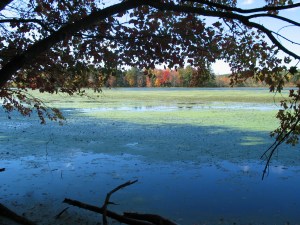
And that was my bike ride, from Ayer through Groton to East Pepperell. It was a good ride, both for foliage and for history.
Going to see the Whydah
In the early morning hours of April 26, 1717, Samuel “Black Sam” Bellamy, pirate commodore, died along with most of his crew when his ship, the Whydah, ran aground and broke up in a storm off Cape Cod, Massachusetts. In 1984, Barry Clifford found what remained of the wreck of the Whydah. It was the first pirate ship wreck from the “Golden Age of Piracy” to be discovered, and the first to have some of its treasures recovered. Clifford set up a museum on the wharf in Provincetown on the Cape to exhibit some of the recovered objects from the ship and to explain their significance. That’s where I went on August 12.
Cape Cod is a summer tourist spot, and its space and economy are structured accordingly. The south coast of the upper Cape is for kitschy family entertainment. I’d never seen a mini-golf course with multiple waterfalls, at least one 20 feet high, until we hit route 28 east of Hyannis. The north coast of the upper Cape is by contrast more rural and a bit quieter. The east coast of the lower Cape is enveloped by the National Seashore (the first one established), which keeps that stretch of the coast relatively unspoiled. There’s only one main road running the length of the lower Cape, and it tends to drop and add lanes seemingly at random. Expect to get caught in at least one traffic jam if you travel to the lower Cape in the summer. And that includes Provincetown, where the museum is. There’s a ferry from Boston to Provincetown, which sits at the very end of the Cape; it’s an alternative, albeit an expensive one, to driving there.
While Provincetown has a reputation as a gay-friendly community, it’s really a compact and walkable tourist trap. Every business is geared toward housing and feeding tourists, or finding other ways to separate them from their money for an experience. It’s the sort of place that would be fun to spend a day being a tourist in. But after a day or two, you’d either have to get away from downtown, or be bored stiff. (Though I could see spending a few months conducting a sociological study of the community.)
The Whydah Museum sits on the same wharf as the ferry to Boston. I gather Clifford wanted to set it up elsewhere (Boston and Tampa were floated as possible sites), and still plans to build a bigger and more permanent museum. So this museum is a small one. Still, you can spend a few hours in it, if you watch the video, read the material posted on the walls, and examine the exhibits with some care.
The exhibits and the information posted on the walls are structured as self-contained modules, which can be examined in any order. That probably makes the museum easier to visit when it is crowded; one can skip from one display to another and eventually cover the whole museum without losing the thread of the story. On the other hand, it means there really isn’t a single story line running through most of the exhibits. If you don’t know who Bellamy was or have any other context to understand the exhibits, then definitely watch the introductory video. Otherwise you’ll be seeing a lot of information that you won’t be able to pull together unless you have an eidetic memory.
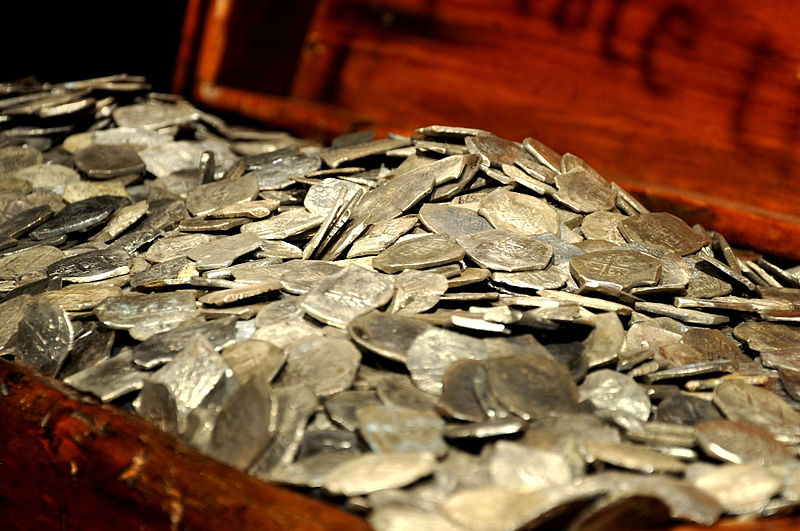
On the positive side, nowhere else (with one exception, see below) can you see exhibits from an actual pirate wreck, whether silver coins, cannonballs, or even the ship’s bell. And one of the three “rooms” of exhibits covers Clifford’s most recent project, to salvage the remains of a pirate ship that went down near Madagascar in the Indian Ocean. On the negative side, if you want to get a solid understanding of the Golden Age of Piracy, read a book instead. The information displays in the museum only cover some aspects of the subject, and doesn’t pull the pieces together.
Oh, the other place you can see exhibits from an actual pirate wreck? Some of the Whydah exhibits are on tour, including the famous ship’s bell. Catch it on tour, or wait until it returns, if you have your heart set on seeing the object that proved Clifford had found the Whydah.
Welcome to Sillyhistory!
I’m starting up a new blog, Sillyhistory, to cover topics related to my historical work. I don’t yet have a schedule for posting. But I do have an idea about what topic will come first: pirates!